Paper-Based Packaging Design for a Bathroom Product
A bathroom product needs packaging that matches its shape, supports appropriate contact areas and makes packing practical. In this project, the customer requested an all-paper structural packaging design. PackCube developed a corrugated packaging arrangement combining an outer carton with folded paperboard supports and positioning components.
The project photographs show the product being fitted into the carton, the surrounding paperboard frame and the placement of an upper positioning component. They document the sample assembly and explain how the structural elements work together.
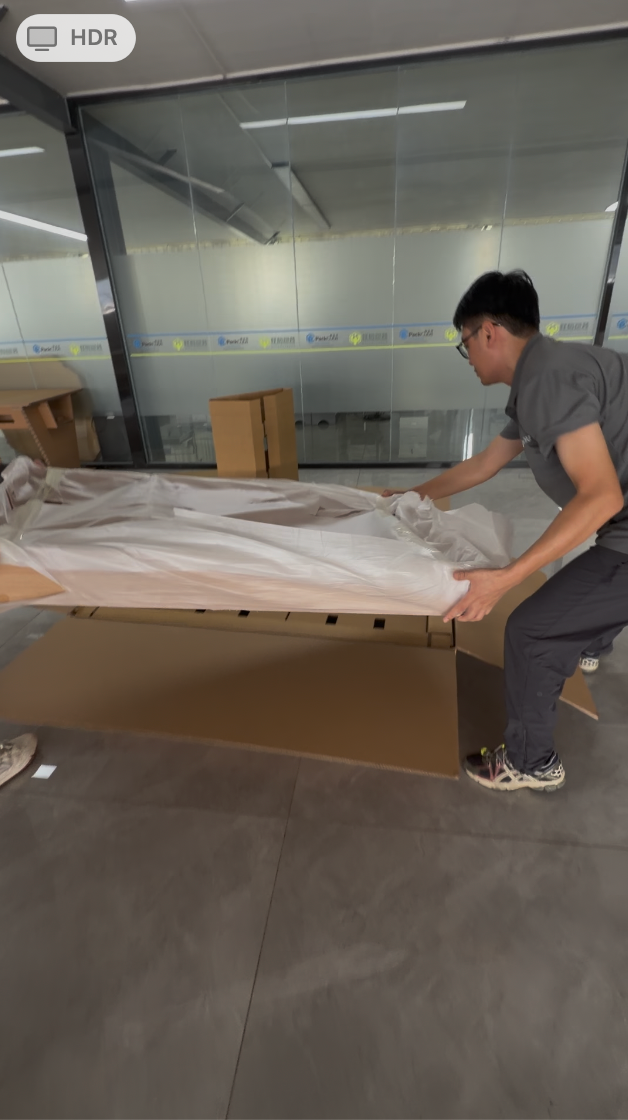
Sample fitting of the bathroom product in its paper-based packaging.
Designing Around the Product
The starting point is the product itself: its dimensions, weight, geometry, surface finish and areas that can safely carry loads. A carton that fits the overall dimensions is only one part of the solution. The internal structure must also account for the clearances around the product and the sequence used to load and remove it.
For bathroom products with finished surfaces, packaging design must consider both movement inside the carton and contact between the packaging and the product. Protruding features and unsupported areas require particular attention during sample fitting.
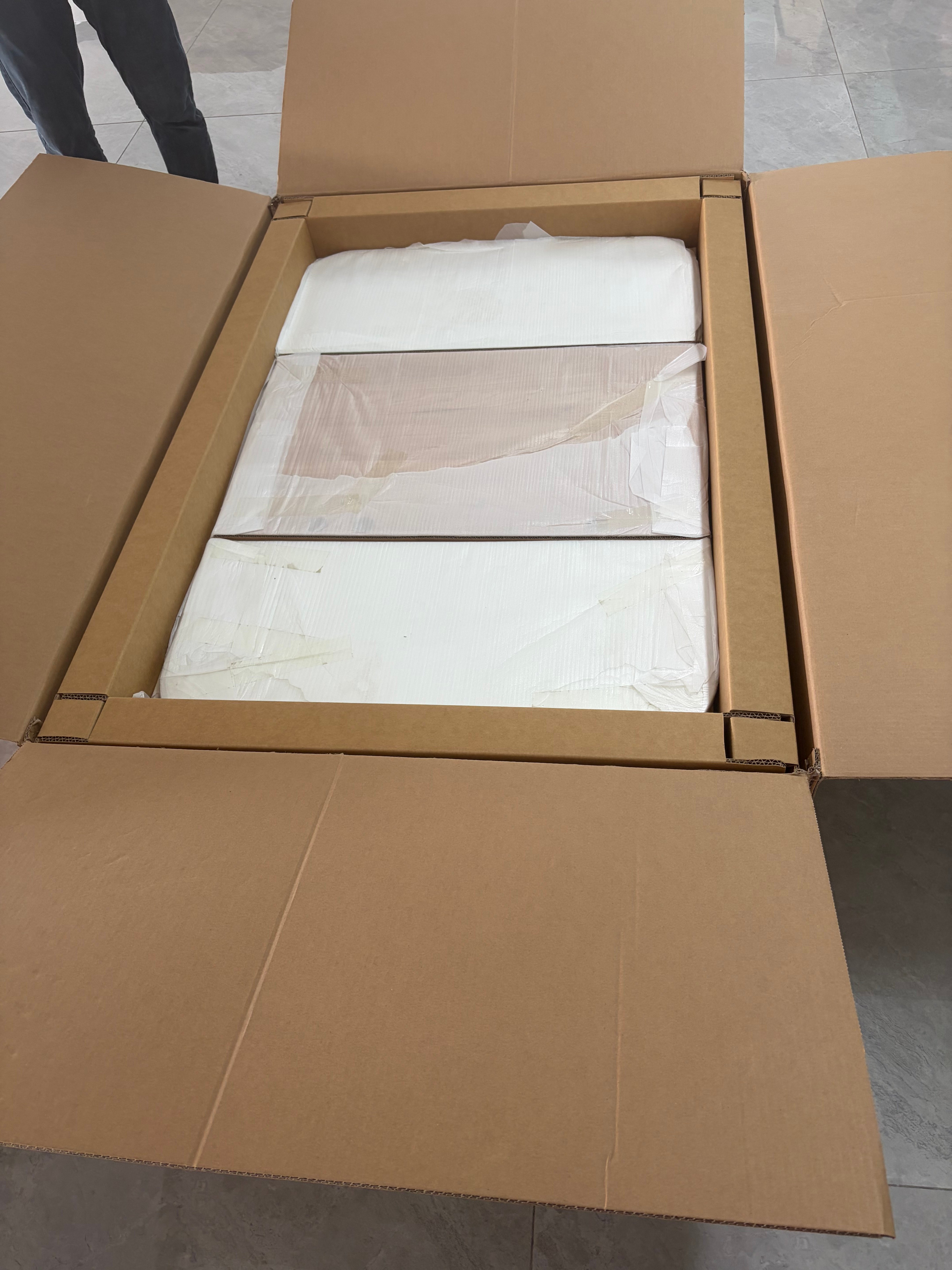
Folded paperboard components frame the product within the outer carton.
A Paperboard Frame for Positioning
In the photographed sample, folded paperboard components form a frame along the sides and ends of the carton. These components define the available space around the product and are intended to help control lateral movement.
The frame uses shaped and folded components rather than loose filling material. Its dimensions and contact positions must be matched to the actual product. During development, engineers should check that the supports remain correctly seated and do not place unintended pressure on vulnerable parts.
Upper Positioning and Packing Access
A separate paperboard component is placed above part of the product. This adds a positioning element within the packaging arrangement while allowing the assembly to be handled in stages.
The packing sequence matters as much as the shape of each component. Operators need to be able to identify the parts, position the product correctly and close the carton without forcing the internal structure. Sample assembly provides an opportunity to check these practical details before finalizing the design.
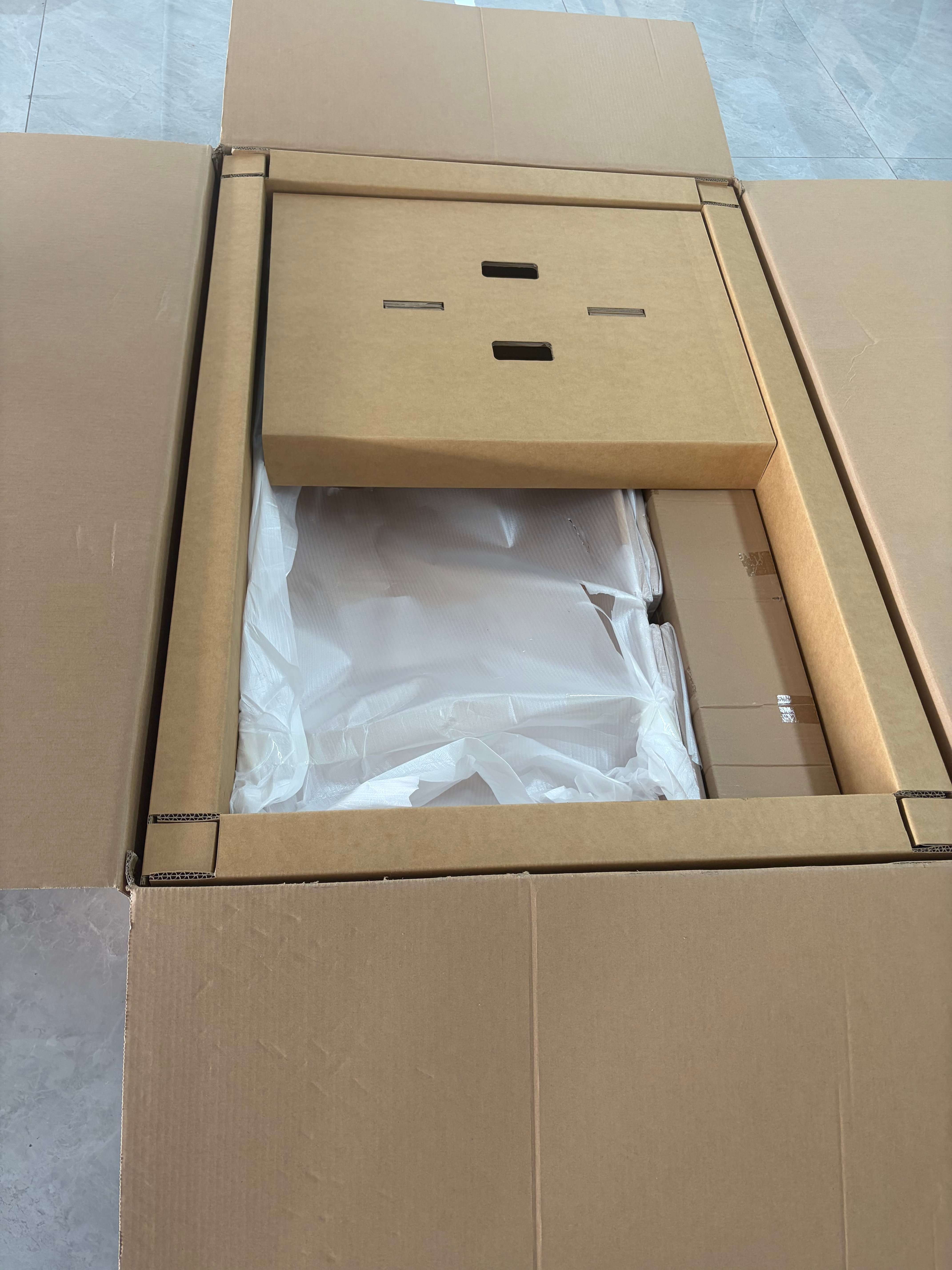
Upper paperboard positioning component and surrounding support frame.
What “All-Paper” Means in This Project
The customer's requirement concerns the structural packaging system: the outer carton and the internal supporting and positioning components are designed around paper-based materials.
The photographs also show a separate white surface-protection wrapping around the product. Surface wrapping, sealing materials and accessories are specified separately to suit the product finish and customer requirements.
Verification Before Production
Sample fitting helps assess dimensional compatibility and packing usability. Transport performance requires further verification against the actual product and distribution conditions.
Relevant checks may include product movement, support stability, surface contact, carton closure and stacking requirements. Drop, vibration, compression or humidity-related evaluations should be selected according to the intended shipping route and customer requirements.
A Product-Specific Packaging Approach
This project illustrates how corrugated components can be arranged into a coordinated structural packaging system for a bathroom product. The focus is on matching the carton, support frame and positioning elements to the product rather than selecting an outer box in isolation.
PackCube supports packaging assessment, structural design and sample development for customized projects. To discuss a similar requirement, share the product dimensions and weight, photos or drawings, surface-protection needs, destination and shipping method. These inputs help define a practical packaging specification and validation plan.

 EN