EN
EN
Custom Plywood Pallets: From Prototype Validation to Mass Production and Delivery
2026/10/09
Explore PackCube’s custom plywood pallet project, from design and prototypes to customer on-site validation, mass production after approval, and shipment.

2026/10/04
Our Cambodia company’s molded pulp packaging business brings paper-based protective packaging into a local manufacturing setting. The factory and workshop photographs offer a closer look at the facility, molded pulp forming equipment, drying racks and production handling areas.
The factory entrance introduces the location behind our Cambodia paper-based packaging operations. For customers evaluating a packaging supplier, a view of the actual production site provides useful context for discussions about product requirements, samples and order planning.
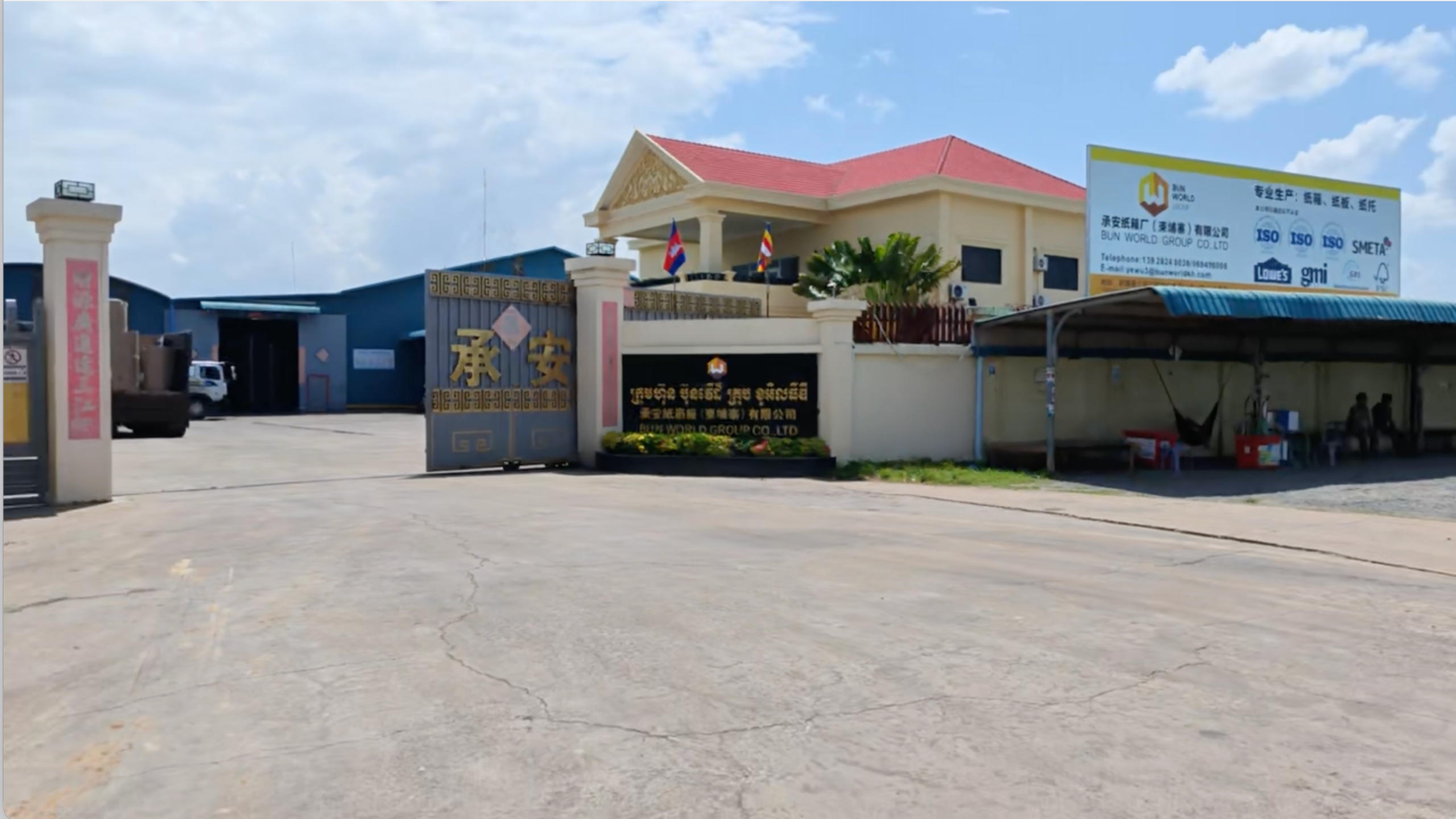
Exterior view of our Cambodia production facility.
Molded pulp packaging uses paper fibres formed into shaped components. Depending on the design, these components can serve as trays, supports or protective inserts that help position a product within its outer packaging. The right structure depends on the product’s dimensions, weight, contact surfaces and transport conditions.
The workshop photographs show operators working with forming and pressing equipment, alongside shaped pulp components. These production steps help turn a packaging design into physical parts whose fit and handling can be assessed before an order moves forward.
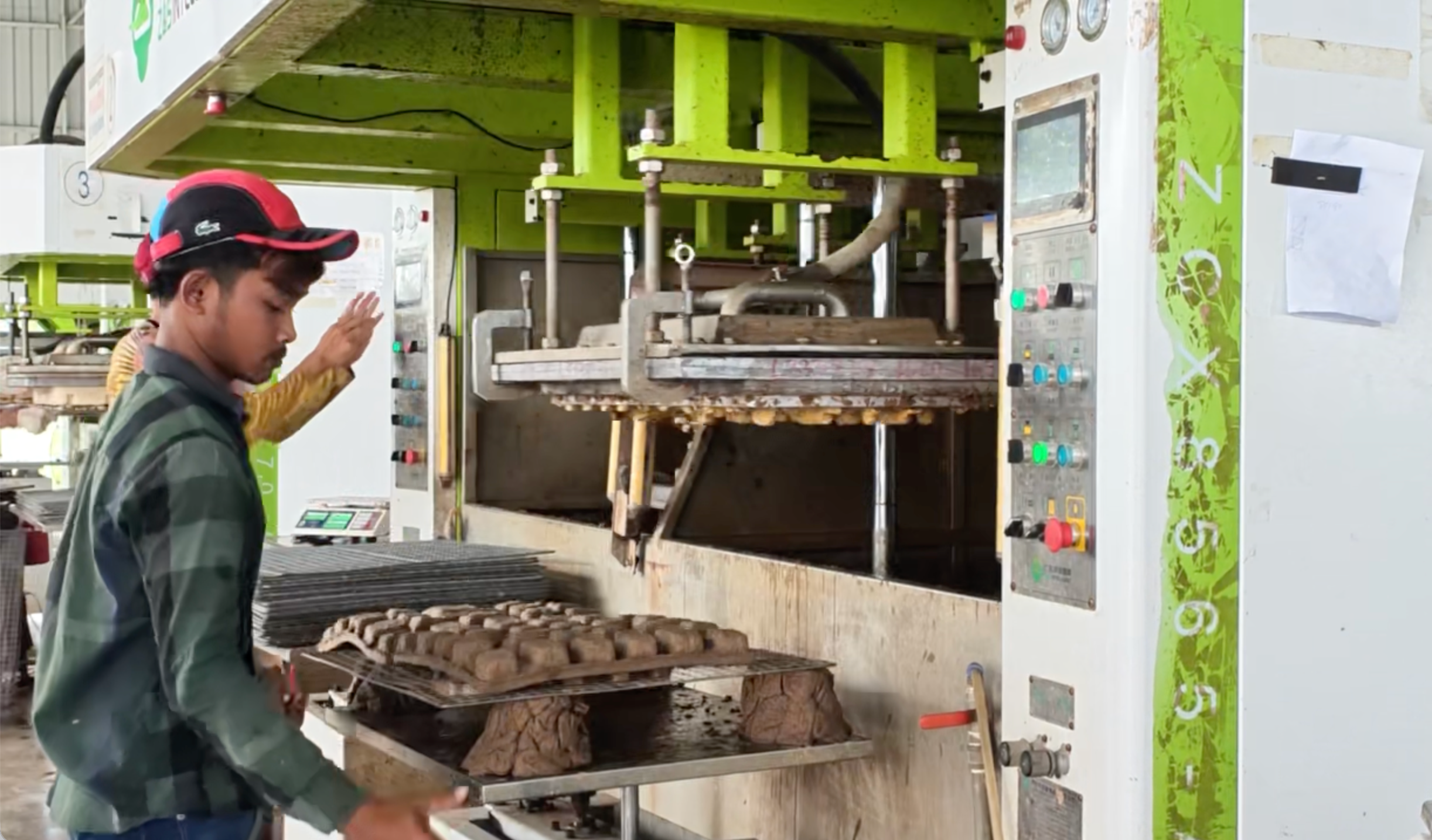
An operator works with molded pulp forming and pressing equipment.
Rows of multi-level racks hold molded pulp components during the drying stage. Drying is an important part of the production process because the moisture condition and shape of the components affect subsequent handling and packaging use.
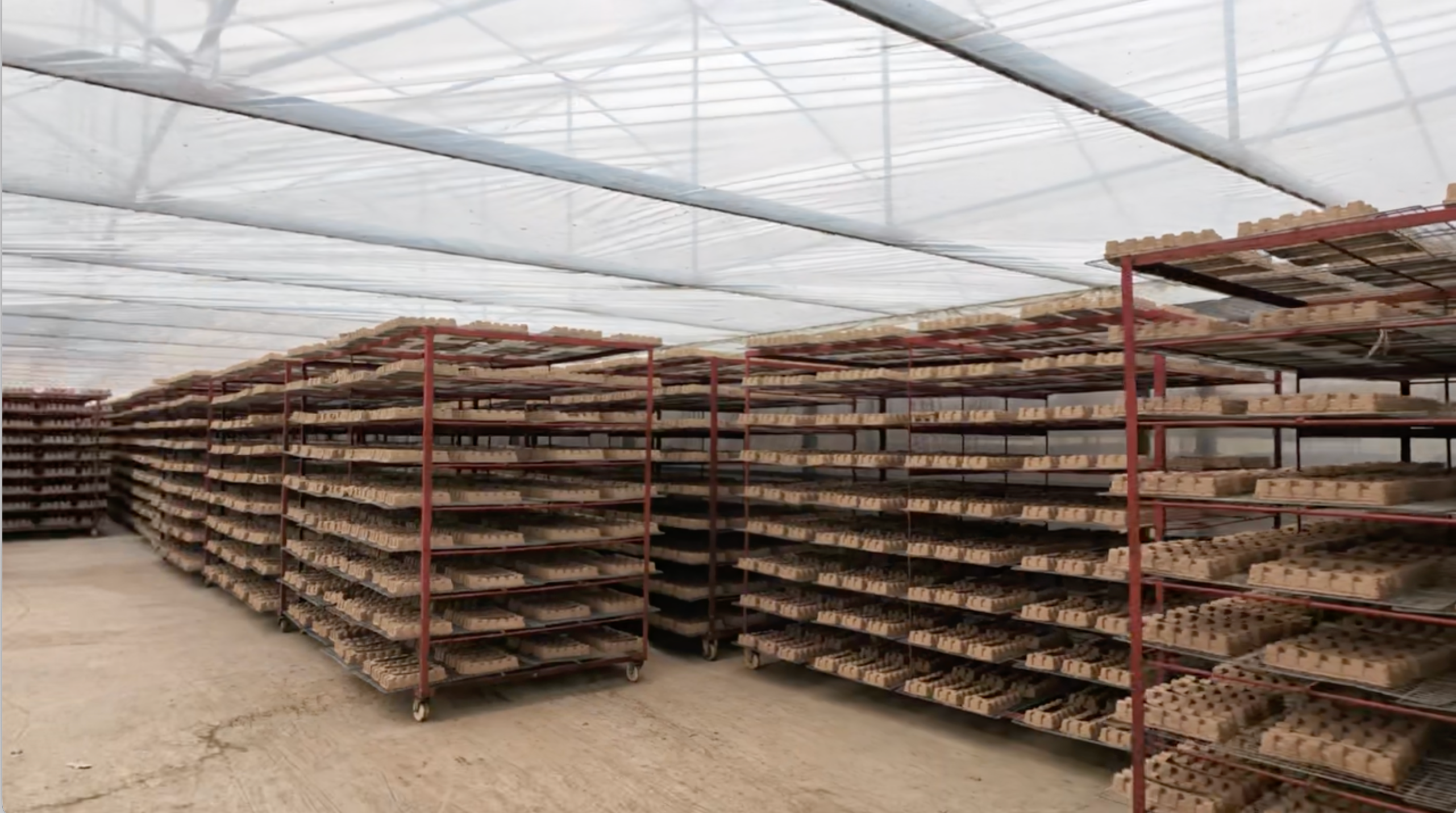
Molded pulp components arranged on multi-level drying racks.
Another view shows molded pulp parts gathered around a workstation for further processing and handling. Together, these images provide a practical view of the activities involved in producing paper-based protective packaging at our Cambodia facility.
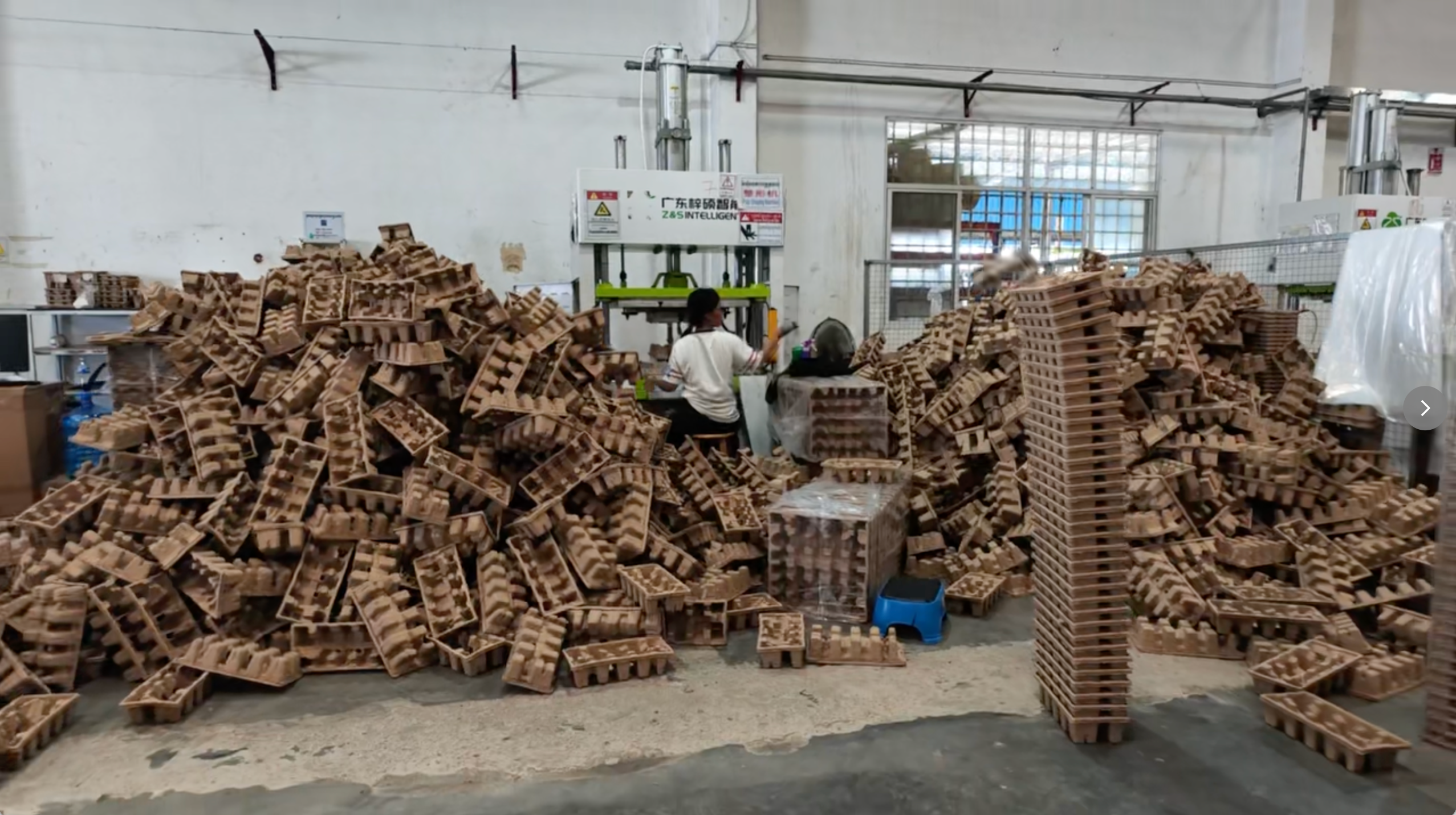
Molded pulp components at a production handling workstation.
A useful packaging discussion begins with product drawings or samples, dimensions and weight, fragile areas, the intended outer carton, stacking needs and the shipping route. Customers can also share expected order quantities and any material or testing requirements.
These inputs help guide the selection of a suitable molded pulp structure and the scope of sample evaluation. Packaging performance should be assessed as part of the complete packing system, including the product, insert and outer package.
We welcome enquiries about our Cambodia molded pulp packaging business. Share your product information and intended application with our team to discuss the next steps for packaging design, sampling and production planning.
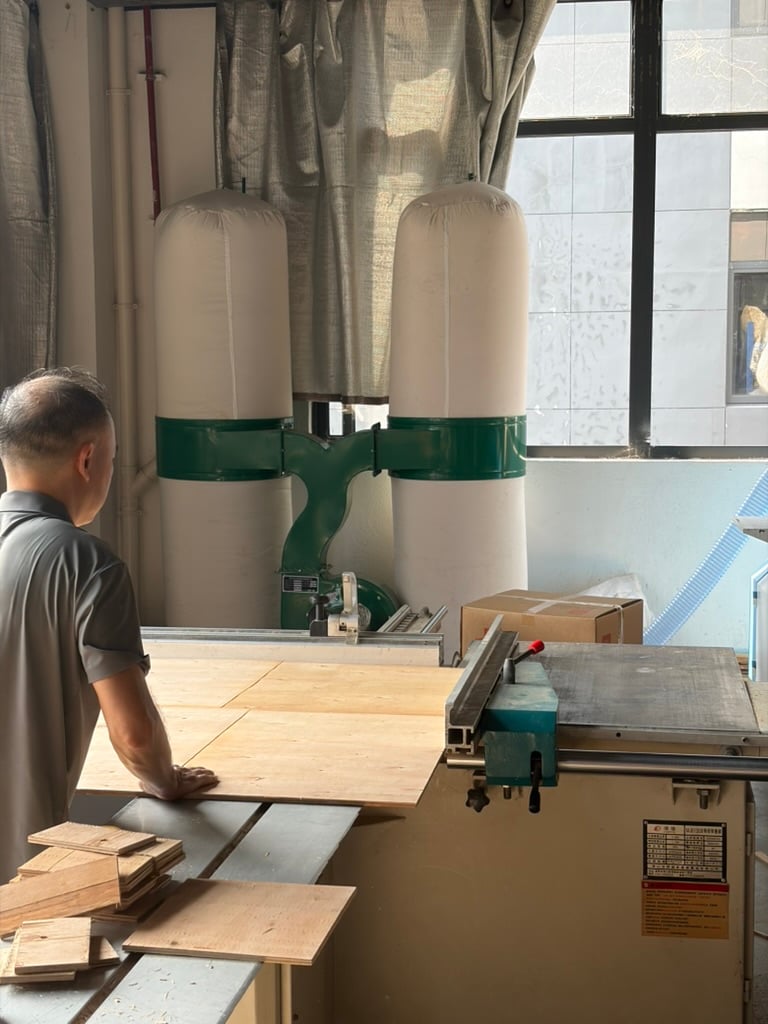
2026/10/09
Explore PackCube’s custom plywood pallet project, from design and prototypes to customer on-site validation, mass production after approval, and shipment.
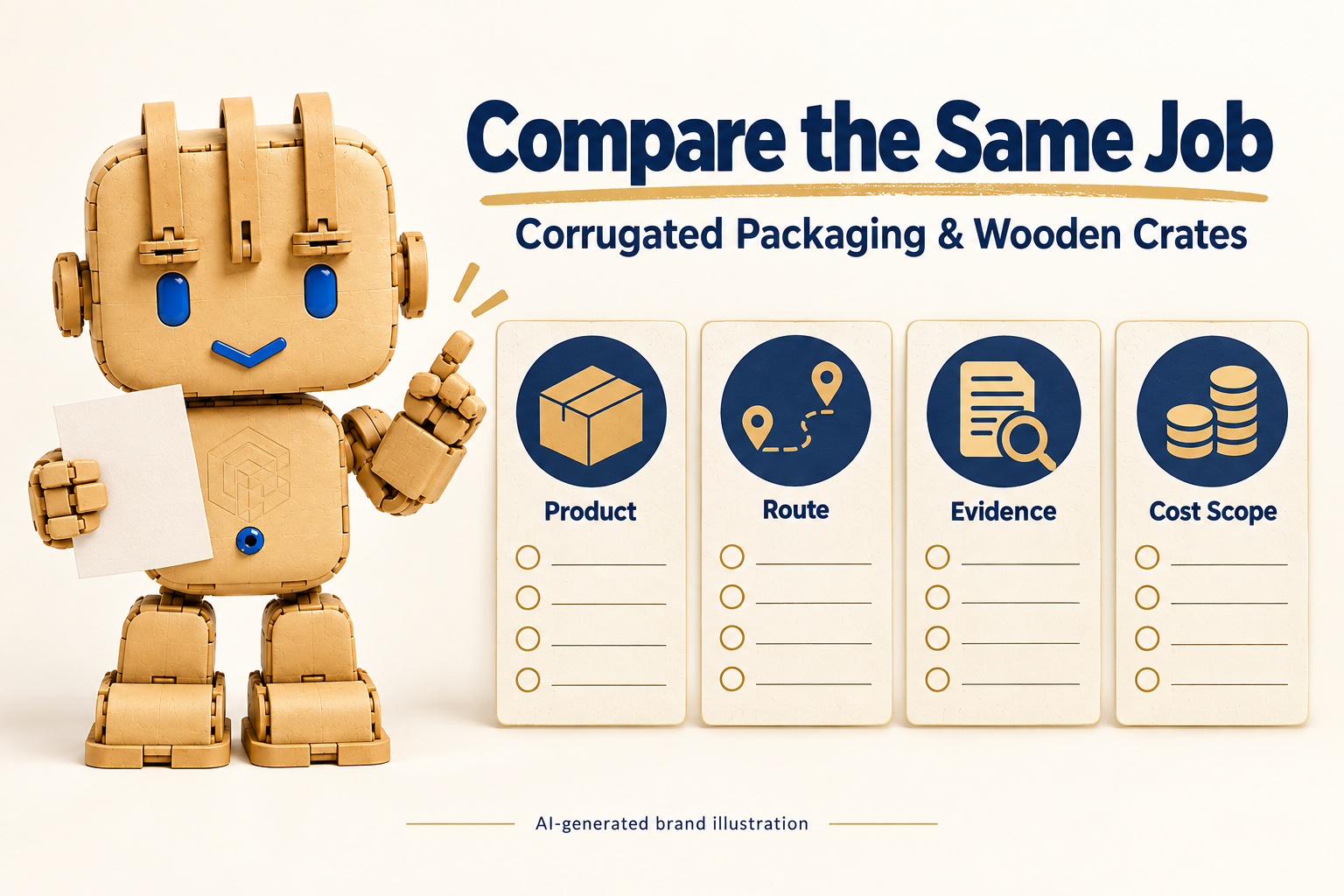
2026/10/06
Compare equipment packaging proposals using the same configuration, shipment conditions, evidence, acceptance criteria and cost scope, without assuming a material winner.
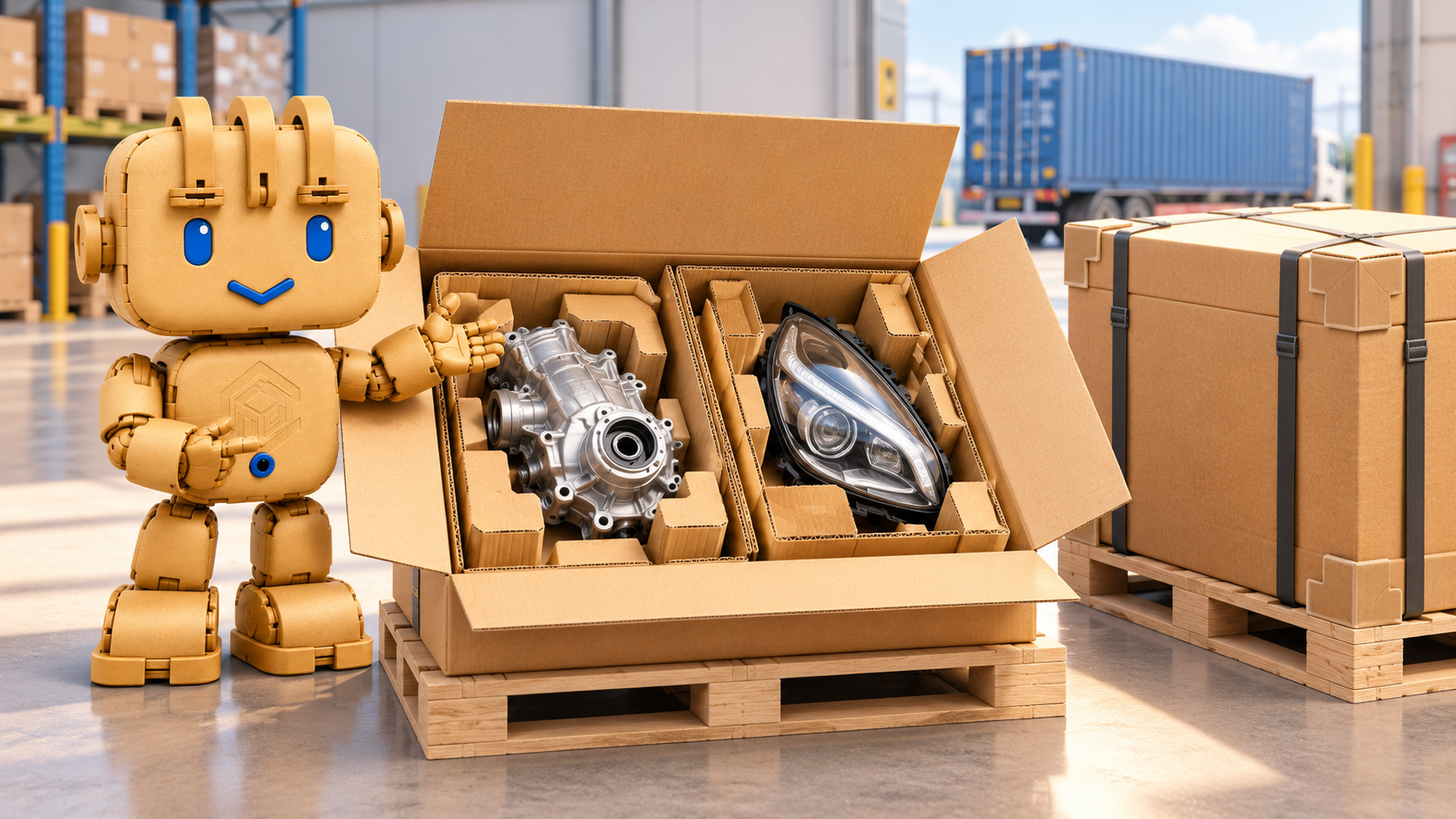
2026/10/03
Explore six key checks for automotive parts export packaging, including product protection, moisture control, pallet stability, compliance and validation.
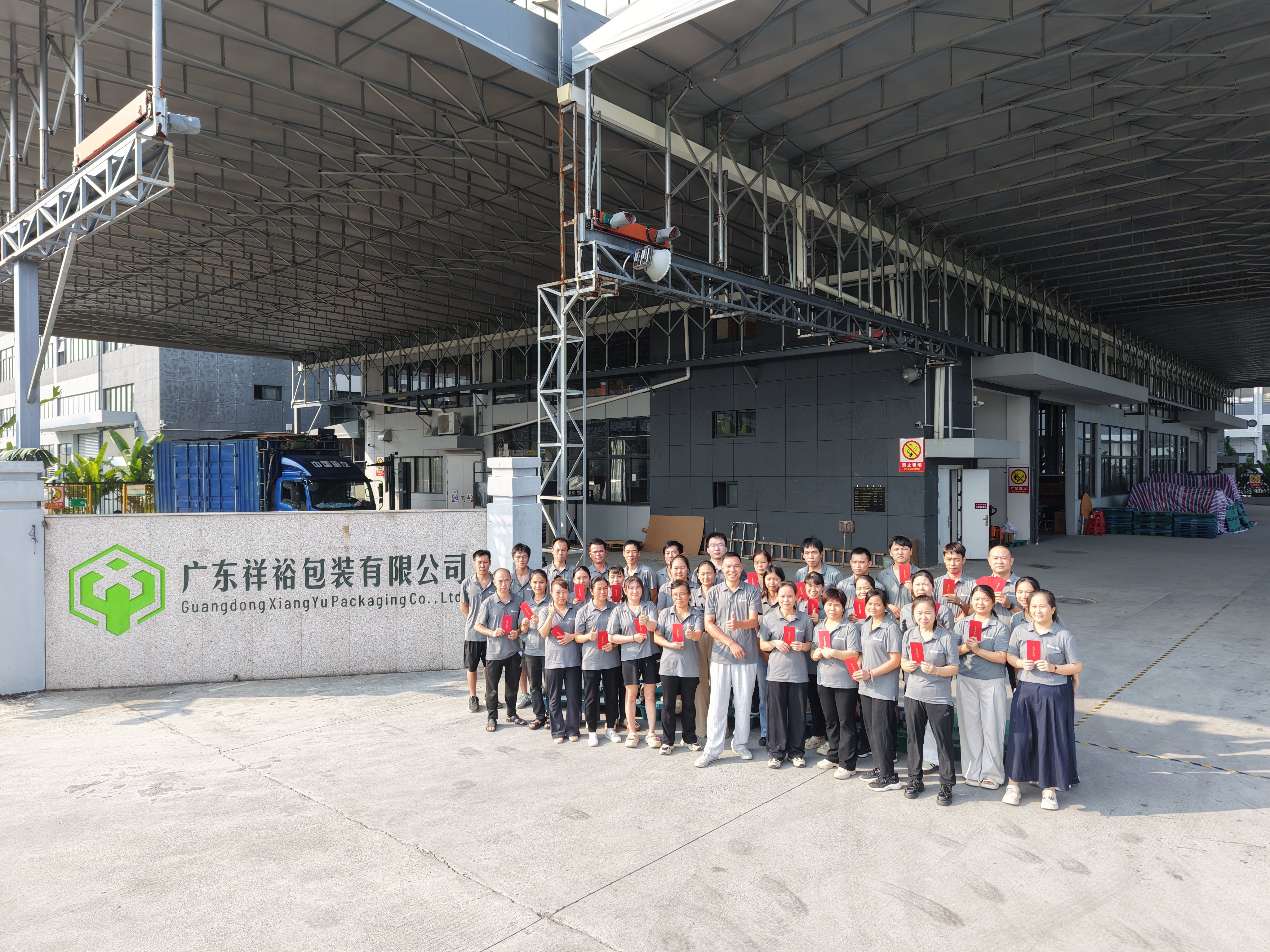
2026/10/02
Guangdong Xiangyu Packaging celebrates the Mid-Autumn Festival with a team photo and festive meal, sharing seasonal joy and strengthening team connections.

2026/09/30
Prepare product, measurement, route, handling, protection and quantity information before an industrial packaging design discussion.